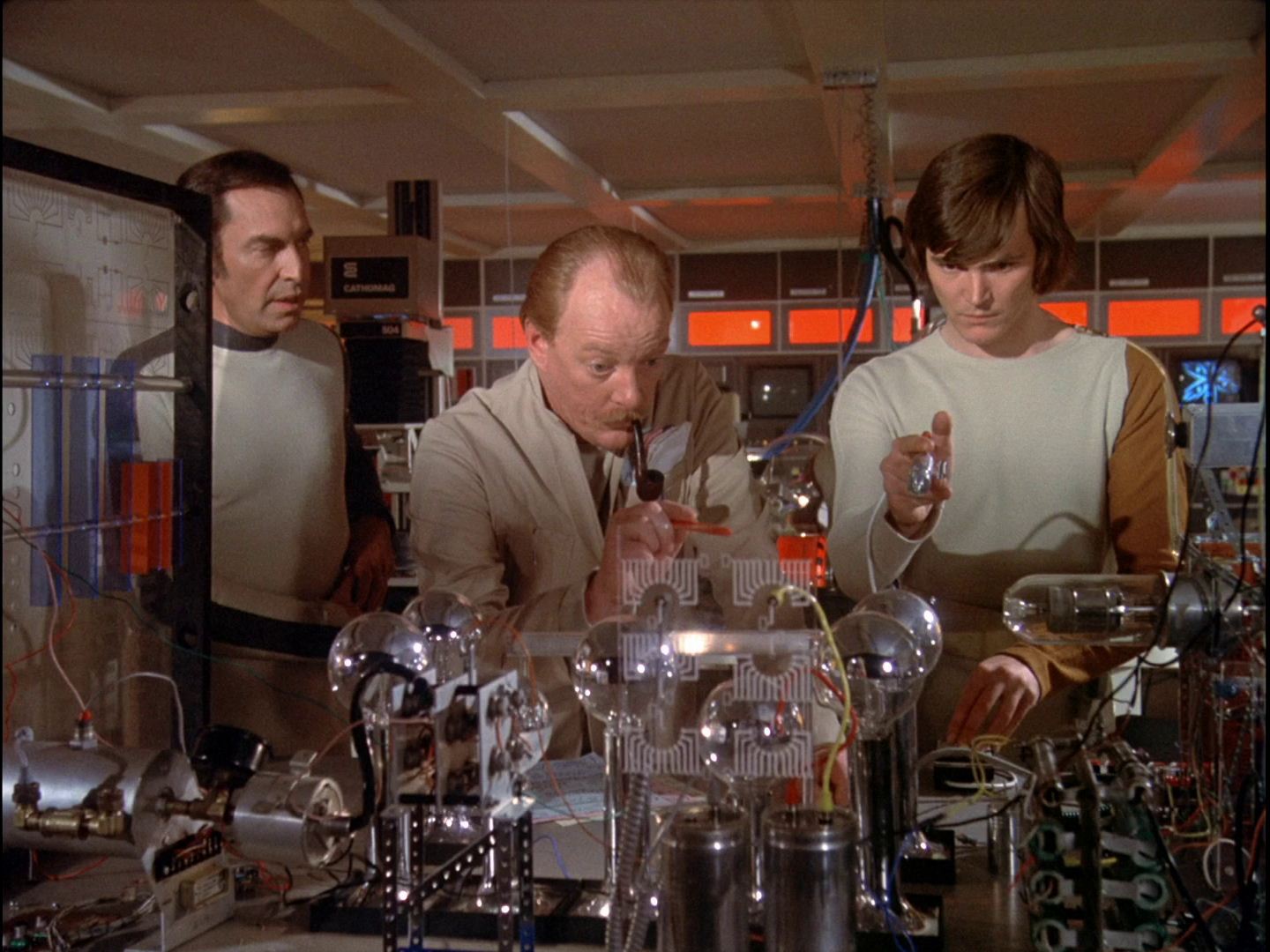
Space 1999: Review: Voyager’s Return

“Voyager’s Return” is a heavy watch for an early episode, and it hits hard right from the jump. The plot centers on Earth’s old technology coming back to haunt Moonbase Alpha in the worst way possible. Voyager One, an unmanned probe launched back in 1985, crosses paths with the wandering moon. But it is definitely not a happy reunion, because this machine is powered by the notorious Queller Drive, a rogue propulsion system that spews lethal fast neutrons, completely cooking any life in its path.
Inside Alpha, the tension gets incredibly high, forcing Commander Koenig to make a brutal choice. He has to decide between blowing the probe out of the sky to save his people or listening to Professor Bergman, who wants to override the system and harvest the massive amount of space data stored inside. The emotional stakes spike when an ordinary scientist on the base, Ernst Linden, reveals his true identity as Ernst Queller—the literal designer of the death engine who has been hiding under an alias out of pure shame. His search for atonement adds a deep layer of human guilt that you just do not normally expect from a standard seventies sci-fi show.
The conflict escalates beautifully when a fleet of alien warships from the Federation of Sidon shows up tracking the probe. It turns out Voyager One already accidentally wiped out two of their colony worlds, and they want absolute vengeance against humanity. You honestly cannot even blame them for being furious, which makes the narrative feel morally gray instead of a basic good versus evil setup. The practical effects and model designs for the Sidon ships look fantastic for the era, adding serious physical weight to the incoming threat.
Overall, this episode stands out because it focuses heavily on the consequences of human arrogance and technology outpacing our own maturity. Jeremy Kemp gives a phenomenal, weary performance as Queller, making his ultimate sacrifice to stop the alien ships feel completely earned. It might skip out on the more trippy, surreal alien landscapes that season one is famous for, but the raw psychological weight makes it a standout chapter that still holds up well today.